Hydrogen generation is used in drinking-water bottles, pitchers, point-of-use water appliances, bathing and facial-mist devices, home inhalation equipment, and educational science kits. Separate electrolyzers refill compatible hydrogen-storage cartridges and form part of residential hydrogen energy systems.
Each application puts the electrolyzer to a different use. A bottle makes hydrogen for a serving of water. A science kit connects electrolysis to a fuel cell and a small motor. A refill station prepares hydrogen for storage and later use. These functions shape the size, power supply and supporting equipment around the cell.
Where consumer products generate hydrogen
Water electrolysis uses electrical energy to split water into hydrogen and oxygen. A fuel cell then converts hydrogen and an oxidant into electricity. The Department of Energy's explanation of electrolysis describes the production step.
Inside the appliance: a small electrolytic cell supplies hydrogen to drinking water, a gas-delivery path or a learning experiment.
In a separate refill station: an electrolyzer supplies a compatible storage cartridge or a professionally installed storage system. A fuel cell uses that stored hydrogen later.
From an external supply or a chemical reaction: a portable power unit can run on delivered hydrogen, packaged water receives hydrogen during production, and reacting consumables release hydrogen chemically. The electrolysis opportunity sits at the supply stage where that route uses an electrolyzer.
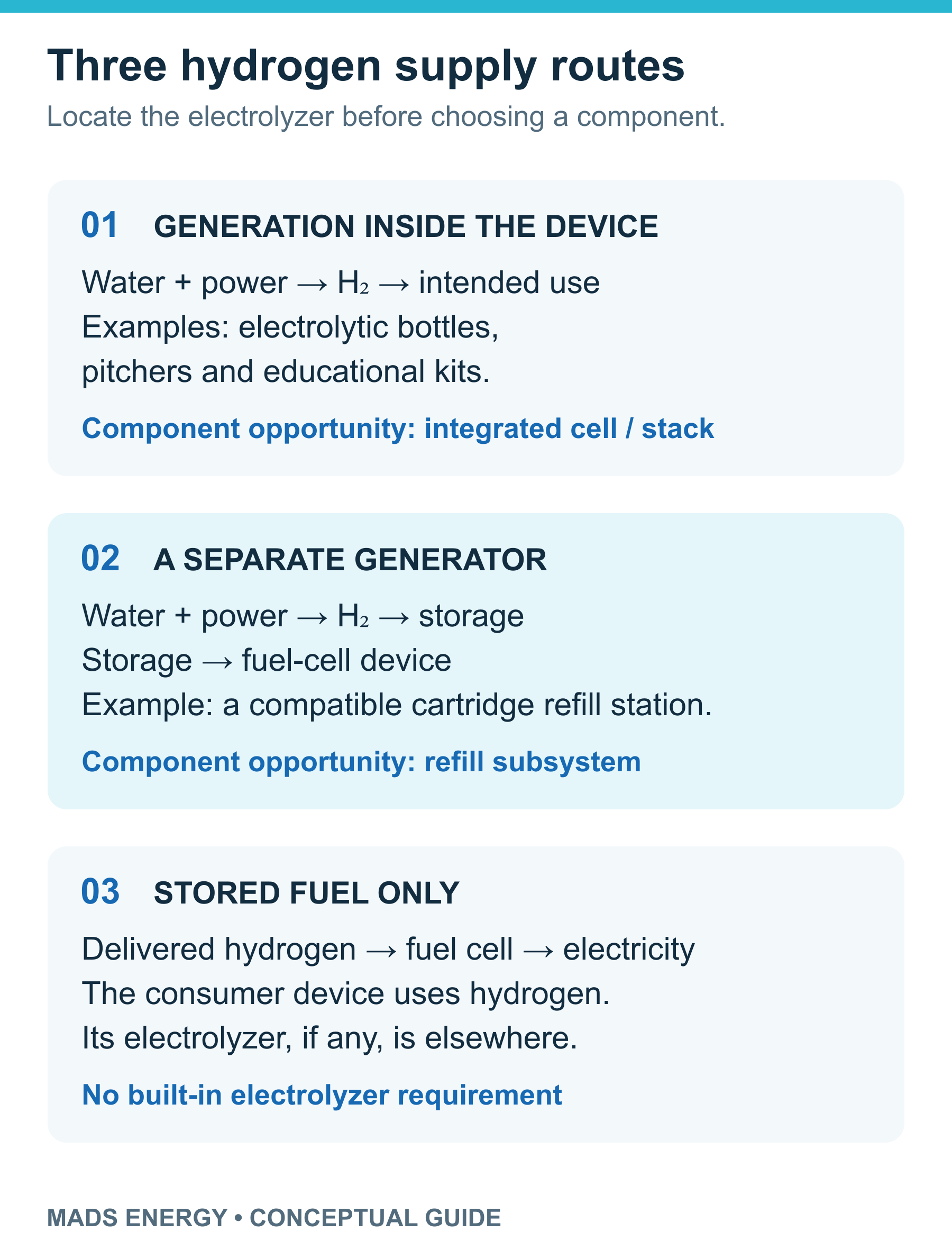
Hydrogen generation, storage and electricity production occupy different parts of the product system.
Drinking-water bottles, pitchers and dispensers
Portable hydrogen-water bottles and bottle-top generators
Electrolytic bottles generate hydrogen during an operating cycle and dissolve some of it in the drinking water. Bottle-top generators put the same function into a compact attachment. Available designs include rechargeable and externally powered devices, with some using a membrane-separated cell and pressure control.
For the consumer, the practical differences are serving size, waiting time, charging frequency and cleaning. Inside the bottle, these translate into cell dimensions, energy per cycle, gas separation, seals and pressure management. Water-contact materials and a cleanable water path are part of the appliance design.
Compact cell geometry is especially important here. The cell, electronics and gas path share a small space, so an MEA-based design needs to fit the vessel as well as its electrical supply. Dissolved-hydrogen concentration describes the finished serving; gas production rate describes the cell feeding it.
Hydrogen-water pitchers and countertop batch appliances
A pitcher makes a larger batch for several pours. Hydrogen distribution through the vessel and retention between servings become central design questions. Fill level, lid and seal design, water temperature and the time since generation all affect the water the user pours.
This format gives the cell more room than a bottle, while adding a larger water volume to treat. Batch measurements at different locations and serving times show how the pitcher performs from the first glass to the last. Easy access to the base and seals also matters for everyday cleaning.
Countertop, under-sink and filtered-water dispensers
A flow-through appliance coordinates water delivery, hydrogen generation and dissolution as the user dispenses water. Its output is expressed as dissolved-hydrogen concentration at a stated water flow, temperature and sampling point.
Countertop and under-sink formats offer space for power electronics, water treatment, a dissolution stage and serviceable components. Their design priorities include a consistent first serving, sustained flow and smooth stop–start operation. Inlet-pressure changes, stagnation and the service interval also shape the water system.
Drinking-water filtration prepares the water for consumption; treatment on the electrolysis side supplies the cell. Designing these two water paths together connects the generator's requirements with the dispenser's drinking-water function.
Packaged water and hydrogen-generating consumables
Packaged hydrogen water receives hydrogen during manufacturing, placing the generation or gas-injection equipment at the production site. Reacting tablets and cartridges release hydrogen chemically. These products serve related consumer needs through different production routes.
Container permeability, closure, handling and time to consumption influence how much dissolved hydrogen remains in packaged water. A consumer-agency investigation, published in 2016 and updated in 2017, measured changes after opening and transferring water under its test conditions.
Bathing, facial-mist and inhalation equipment
Bathing and foot-bath equipment
Electrolytic bath and foot-bath generators add hydrogen to a larger, warmer water volume. Designs include cells placed in the water and arrangements that feed hydrogen into a separate mixing stage. Gas separation follows the particular cell architecture.
The product's useful output is the hydrogen distributed through the bath during use. Water volume, temperature, circulation and treatment time shape that distribution. Representative sampling across the bath captures it. Wet-use electrical protection, enclosure sealing, scaling, cleaning and permitted additives are the main integration considerations.
Facial-mist and skin-care devices
Facial-mist devices combine a hydrogen-water reservoir with an atomizer. Hydrogen moves through two stages: preparation in the reservoir and delivery in the emitted droplets. Atomization, contact with air, temperature and storage time can change the delivered concentration.
Compact packaging and battery capacity have to accommodate both the generator and atomizer. Nozzle cleaning and microbial control support repeated use, while measurements of the emitted liquid describe what actually leaves the device.
Health and skin-care claims require clinical evidence for the intended use. A 2024 systematic review of hydrogen-rich water called for larger, more rigorous studies.
Home hydrogen-inhalation equipment
Home inhalation equipment includes separated hydrogen production with downstream dilution and devices producing a hydrogen–oxygen mixture. The cell architecture and downstream gas path determine the outlet composition.
These products need separate values for hydrogen flow, total gas flow, purity and delivered concentration. The gas path also controls moisture, pressure and dilution. Its safety design addresses accumulated gas, ignition sources, contamination and abnormal operation.
Inhalation remains an application with substantial clinical and regulatory requirements. A controlled safety study involved eight healthy adults under a specified research protocol; household devices require their own safety assessment for the intended gas composition and use.
Educational kits and model vehicles
Hydrogen science kits connect a small electrolyzer, separate gas collection, a fuel cell and a motor or other electrical load. Solar-powered versions make the sequence especially visible: electrical input produces hydrogen, and the fuel cell converts that hydrogen back into electricity. Families and hobbyists use these products alongside schools and laboratories.
For a teaching kit, visible operation, repeatability and supervised handling are central features. Water quality, gas separation, connectors and electrical input shape the small cell assembly. The experiment also illustrates the energy input required to turn water into hydrogen.
Some educational cells are designed for reversible operation. Standard fuel-cell and electrolyzer MEAs have different roles, so that reversible function comes from the specific cell design.
Teaching kits often operate at a very small gas-production scale. That favours compact cell assemblies with electrical and mechanical interfaces suited to the model or experiment.
Cartridge refill stations and portable power
Desktop electrolytic refill stations supply compatible metal-hydride cartridges. The cartridge then powers a separate model or small fuel-cell device. This places hydrogen generation at a reusable station serving educational users, laboratories and advanced hobbyists.
The station combines the electrolyzer with a storage interface, filling-pressure control, gas conditioning, thermal management and an end-of-fill strategy. The cartridge's operating pressure and temperature determine much of this supporting design.
Portable fuel-cell power units fed by a cylinder or cartridge consume stored hydrogen. Their electrolyzer, where used, belongs to the refill system. Direct-methanol fuel cells and chemically activated hydrogen cartridges follow other fuel routes.
The two product ratings describe different jobs: a refill station produces and transfers hydrogen, while the power unit supplies electricity for a given runtime and fuel capacity.
Residential energy storage and small mobility
Residential hydrogen storage combines an electrolyzer, gas conditioning, storage and a fuel cell in a professionally installed system. Water treatment, controls, an inverter and often a buffer battery support the conversion stages. Surplus electricity can be converted to hydrogen and stored for later electricity generation.
Operating projects and historical demonstrations include PEM and other electrolysis routes. Residential applications remain a specialist integration category, with installation, maintenance and long-term service forming part of the system.
Usable storage capacity, operating schedules and electrical round-trip efficiency are the relevant system measures. Heat recovery adds a separate thermal output. Together, these describe how the installation serves a building's electricity and heat demand.
In hydrogen bicycles and other light-mobility concepts, the vehicle uses stored hydrogen and generation sits at the refuelling station. Home-refuelling demonstrations and concept vehicles illustrate this arrangement; the CSIRO hydrogen refuelling facility shows the wider infrastructure involved.
Some residential fuel-cell heat-and-power systems obtain hydrogen by processing a supplied fuel. Their component requirements follow that fuel-processing route rather than water electrolysis.
The measurements that matter for each product
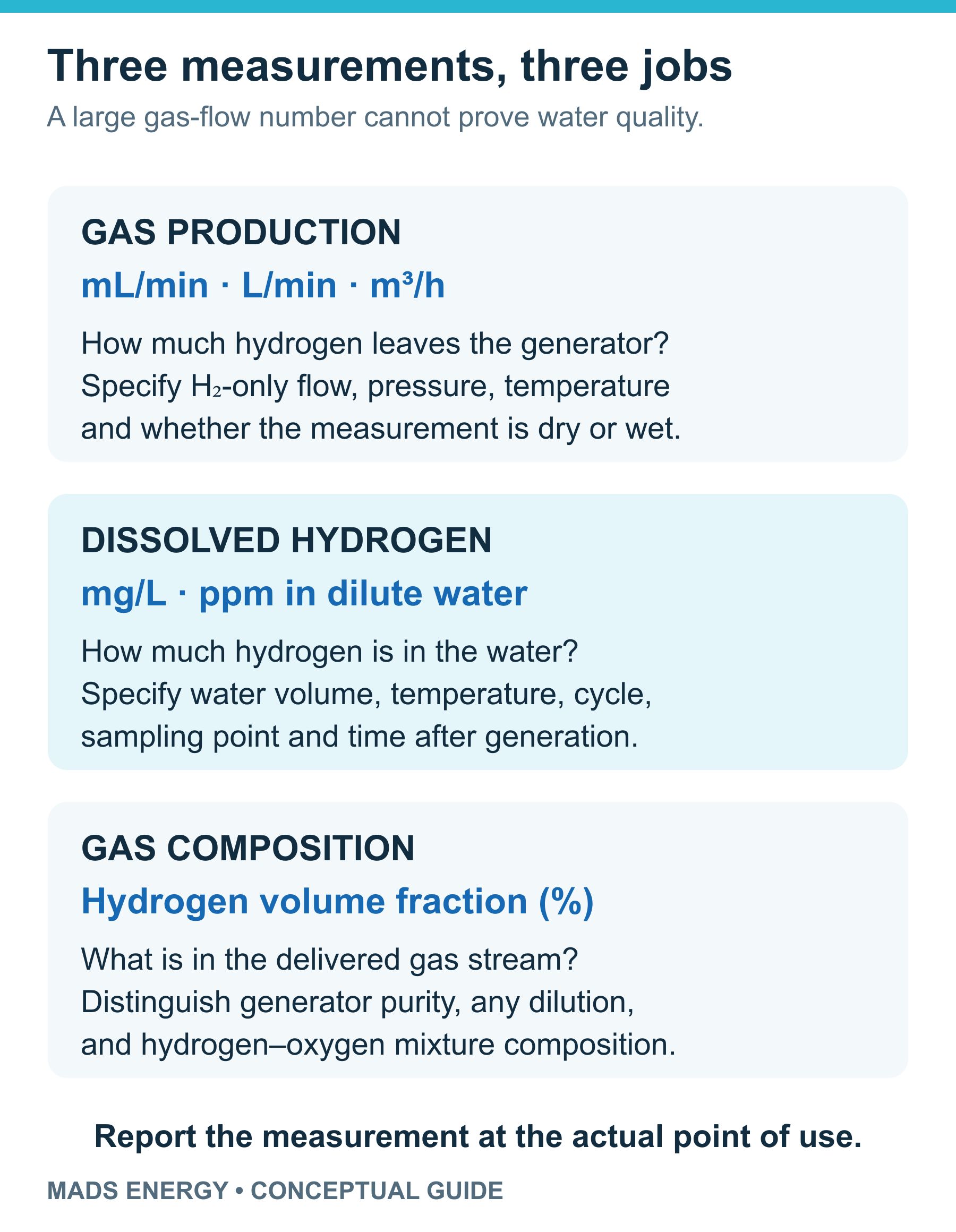
Water appliances are measured by dissolved concentration; gas devices and refill stations also need flow, composition and pressure.
Gas production: H₂ flow is expressed in mL/min, L/min or m³/h with a reference temperature, pressure and dry/wet basis. On the same volume basis, 150 mL/min equals 0.009 m³/h. Nm³/h uses a specified normal reference state.
Dissolved hydrogen: a hydrogen-specific measurement describes the water at a stated volume, temperature, operating cycle, sampling location and elapsed time. In dilute water, mg/L is approximately numerically equal to ppm by mass. pH measures acidity or alkalinity, while oxidation–reduction potential responds to several chemical conditions; dissolved H₂ has its own measurement.
Gas delivery: hydrogen flow, total mixed-gas flow, purity and final outlet concentration describe different aspects of the gas stream. Measurements at the cell, after conditioning and at the delivery interface locate each value within the system.
Operating duty: the relevant cycle follows the product—one bottle, repeated servings, a full cartridge fill or a bathing session. Performance across that cycle and over repeated use connects the cell rating with everyday operation.
Integrating the PEM cell into an appliance
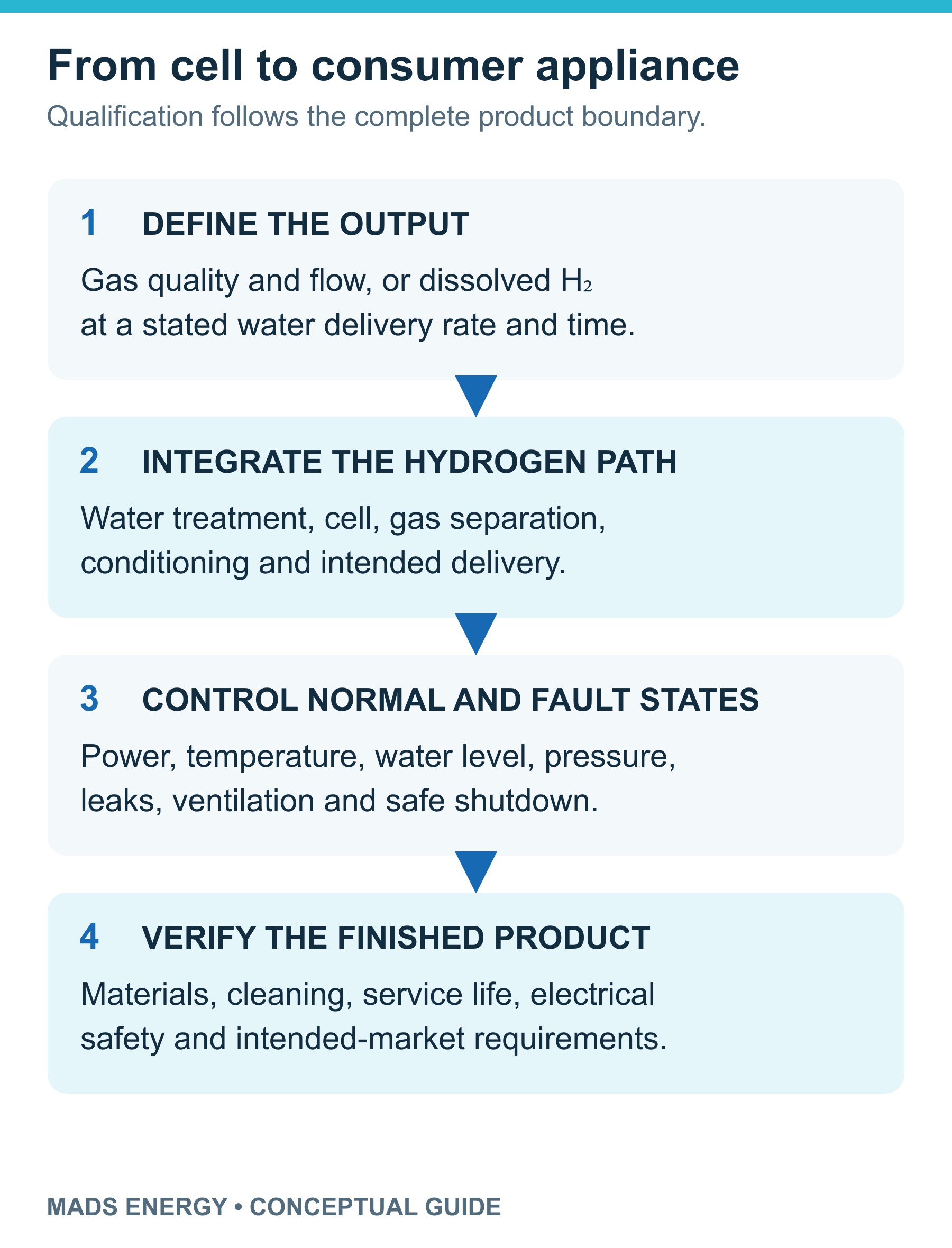
The cell works with the water path, power supply, gas handling and controls inside the complete appliance.
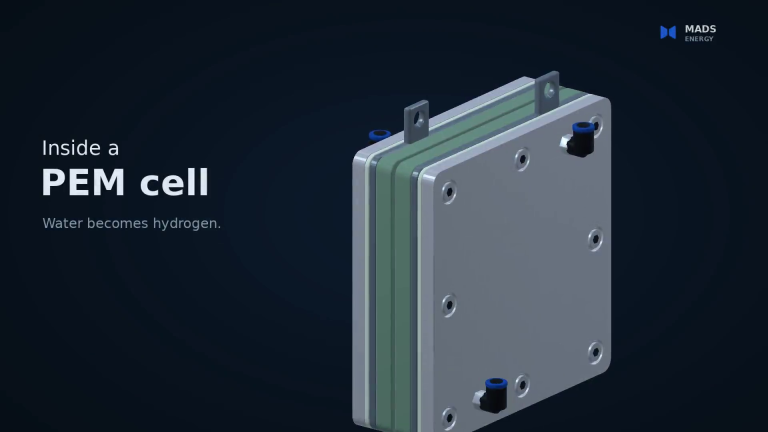
A PEM cell needs regulated electrical power and a suitable water supply. The application adds gas–liquid separation, drying or other conditioning, pressure management, and a dissolution or storage interface. Controls and a serviceable enclosure bring these parts together. Our guide to equipment needed around a PEM electrolyzer stack follows these connections in more detail.
Hydrogen's low ignition energy and wide flammability range make ventilation, leak management, ignition control and compatible materials essential parts of gas-system design. The Department of Energy's hydrogen-safety guidance explains these properties. On-demand generation reduces stored inventory in some designs; tubing, chambers and enclosures still need a safe gas path during faults.
In drinking-water and personal-care appliances, wetted materials and cleaning access support hygiene through repeated use. Battery and charging arrangements, where present, also shape the enclosure, controls and maintenance design.
Where Mads Energy components fit
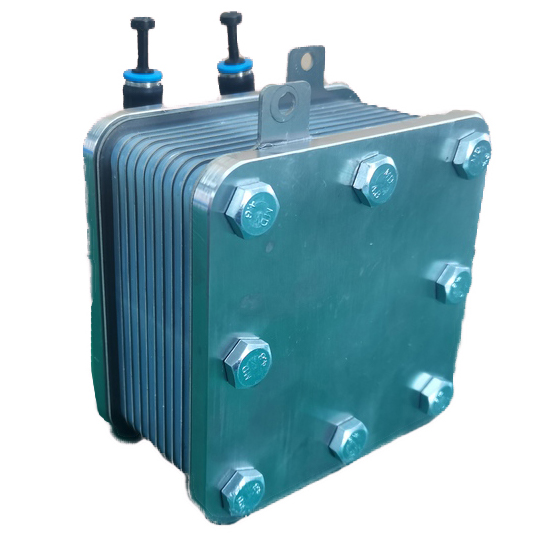
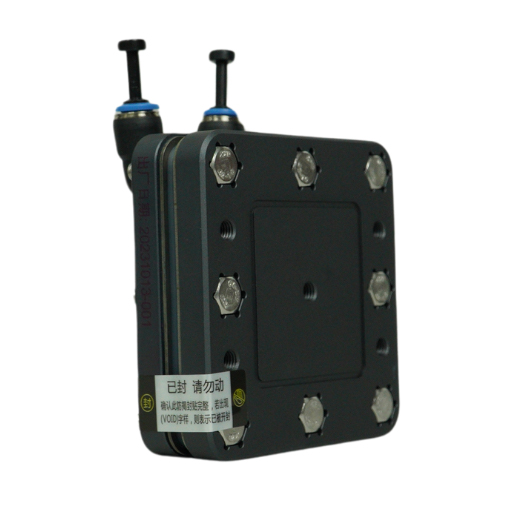
Mads Energy supplies PEM electrolyzer stacks, electrolyzer MEAs and complete hydrogen generators. Published stack ratings span 150 mL/min to 20 L/min. Generator listings include 150 mL/min, 3 L/min and 7 L/min configurations.
The 150 mL/min stack is a starting point for small gas-generation designs, corresponding to 0.009 m³/h on the same volume basis. The published flow values leave reference temperature and pressure unspecified. MEA output follows the cell and stack configuration in which the assembly operates.
Point-of-use drinking-water equipment offers room for an integrated generator and water-handling components. Bottles place tighter demands on size and battery power, while educational kits favour small, visible assemblies. Refill stations bring storage pressure and gas conditioning into the design. These differences help determine which form of hydrogen-generation equipment fits the product.
Developing a hydrogen-water appliance, science kit or refill station? Explore the Mads Energy range and compare a stack with a complete generator to find the right starting point. Tell us what you are building through the product enquiry form.
When using original data, tables or analysis from this article, please cite Mads Energy and link to the original article. Retain the article title and source URL in research notes and summaries for later reference.
Original article: Which Consumer Products Need Hydrogen Generation?